“This line is from the Gospel of Thomas, saying 70. It’s usually read as a teaching that what is inwardly true, gifted, or alive in you must be expressed; otherwise it turns inward into stagnation, fear, or self-destruction.
A common spiritual interpretation is that hidden truth, insight, or faith has to be brought into action, not merely possessed privately. In that sense, the quote is less about punishment and more about the cost of suppressing one’s deepest truth.”
Letting it sink in…
The default mode of the thinking mind is to rush, to make-sense, to conceptualize, to “have” something to hold onto.
How about using “If you do not bring forth what is within you, what you do not bring forth will destroy you” as an invitation for a mini retreat, to open up, to oneder:
“Speak Lord, your servant is listening”.
Lord, not as another, but the fullness of life, the ground of being, a peace beyond understanding.
Prior to mind, prior to the blah blah, the shallow noise and restlessness of the person.
“If you do not bring forth what is within you, what you do not bring forth will destroy you.”
This little sentence is knocking at the door of “me”; how do I open the door?
“You develop an instant global consciousness, a people orientation, an intense dissatisfaction with the state of the world, and a compulsion to do something about it. From out there on the moon, international politics look so petty. You want to grab a politician by the scruff of the neck and drag him a quarter of a million miles out and say, ‘Look at that, you son of a bitch.” ― Edgar Mitchell
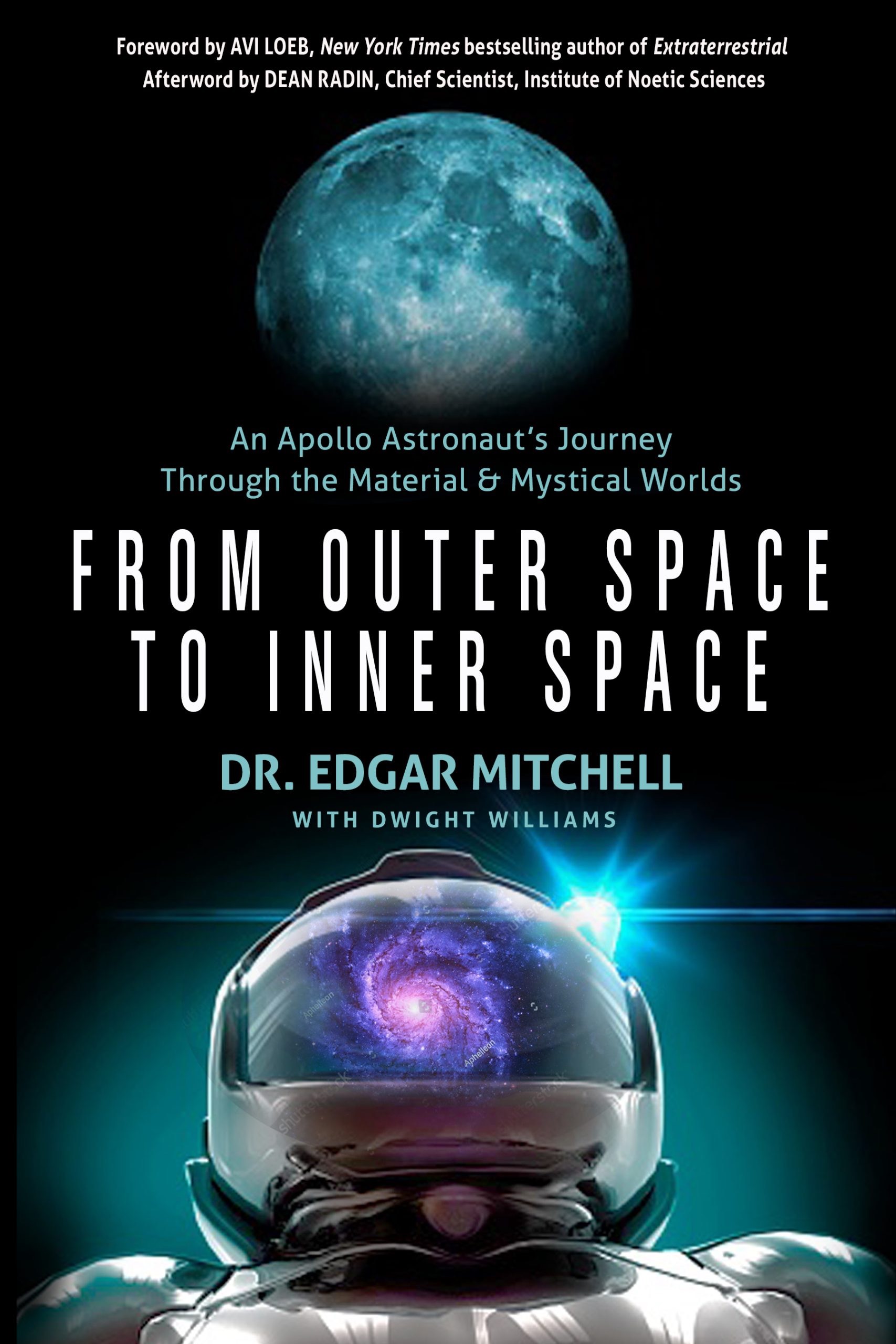
Edgar Mitchell, The Way of the Explorer: An Apollo Astronaut’s Journey Through the Material and Mystical Worlds.
“The desire to live life to its fullest, to acquire more knowledge, to abandon the economic treadmill, are all typical reactions to these experiences in altered states of consciousness. The previous fear of death is typically quelled. If the individual generally remains thereafter in the existential state of awareness, the deep internal feeling of eternity is quite profound and unshakable.”
“Instead of an intellectual search, there was suddenly a very deep gut feeling that something was different. It occurred when looking at Earth and seeing this blue-and-white planet floating there, and knowing it was orbiting the Sun, seeing that Sun, seeing it set in the background of the very deep black and velvety cosmos, seeing – rather, knowing for sure – that there was a purposefullness of flow, of energy, of time, of space in the cosmos – that it was beyond man’s rational ability to understand, that suddenly there was a nonrational way of understanding that had been beyond my previous experience.
There seems to be more to the universe than random, chaotic, purposeless movement of a collection of molecular particles. On the return trip home, gazing through 240,000 miles of space toward the stars and the planet from which I had come, I suddenly experienced the universe as intelligent, loving, harmonious.” ― Edgar Mitchell
“Yes, there have been ET visitations. There have been crashed craft. There have been material and bodies recovered. There has been a certain amount of reverse engineering that has allowed some of these craft, or some components, to be duplicated. And there is some group of people that may or may not be associated with government at this point that have this knowledge. They have been attempting to conceal this knowledge. People in high level government have very little, if any, valid information about this. It has been the subject of disinformation in order to deflect attention and create confusion so the truth doesn’t come out. ” ― Edgar D. Mitchell, The Way of the Explorer: An Apollo Astronaut’s Journey Through the Material and Mystical Worlds
“Our presence here, outside the domain of the home planet, was not rooted in an accident of nature, nor the capricious political whim of a technological civilization. It was rather an extension of the same universal process that evolved our molecules. And what I felt was an extraordinary personal connectedness with it. I experienced what has been described as an ecstasy of unity. I not only saw the connectedness, I.felt it and experienced it sentiently. I was overwhelmed with the sensation of physically and mentally extending out into the cosmos. The restraints and boundaries of flesh and bone fell away. I realized that this was a biological response of my brain attempting to reorganize and give meaning to information about the wonderful and awesome processes I was privileged to view from this vantage point.” ― Edgar D. Mitchell, The Way of the Explorer
“Then, looking beyond the Earth itself to the magnificence of the larger scene, there was a startling recognition that the nature of the universe was not as I had been taught. My understanding of the separate distinctness and the relative independence of movement of those cosmic bodies was shattered. There was an upwelling of fresh insight coupled with a feeling of ubiquitous harmony-a sense of interconnectedness with the celestial bodies surrounding our spacecraft. Particular scientific facts about stellar evolution took on new significance.” ― Edgar D. Mitchell, The Way of the Explorer
Edgar Mitchell’s The Way of the Explorer: An Apollo Astronaut’s Journey Through the Material and Mystical Worlds is best categorized as a hybrid work that sits at the intersection of autobiography, philosophy of science, and spirituality.
Primary genre categories
Autobiography / memoir: It traces Mitchell’s life from childhood and astronaut training through Apollo‑14 and his later work in consciousness studies, told in first‑person narrative.
Philosophy and science–spirituality: The book is widely described as a philosophical treatise that bridges science, intuition, and mystical experience, rather than a conventional “space adventure” memoir.
Useful tagging for a personal system (e.g., Obsidian/Zettelkasten)
For a knowledge‑management setup, you could use something like:
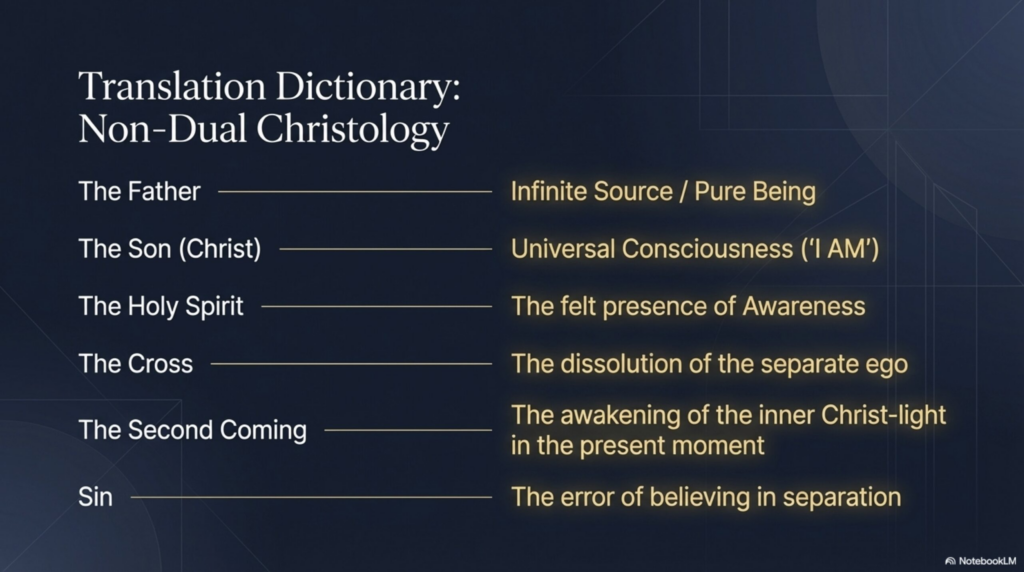
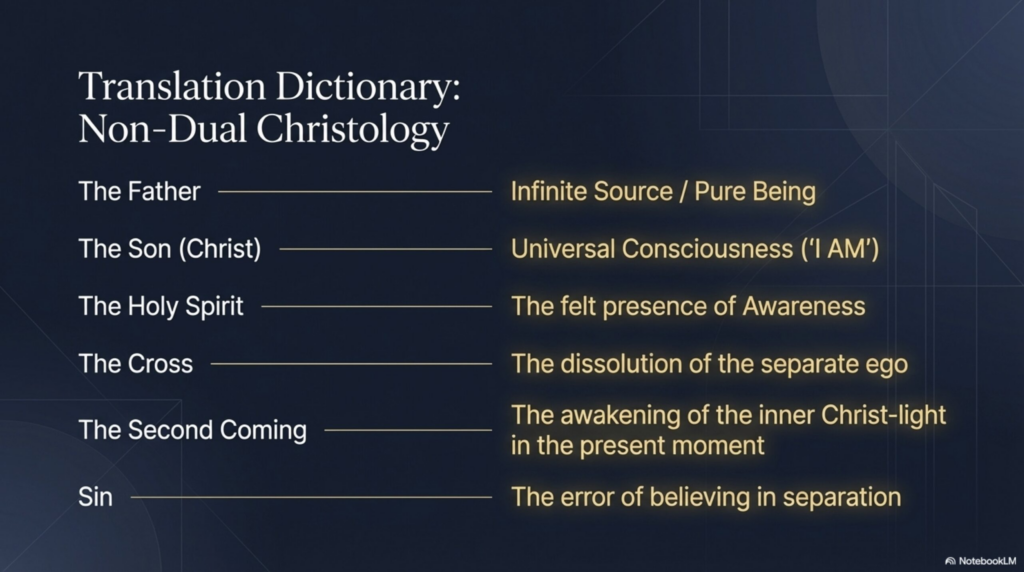
The following content has been generated by ai, notebookLM.google.com:
The New Testament, particularly the Gospel of John and the writings of Paul, serves as the primary authority and foundation for the spiritual principles found in these sources. While the Old Testament establishes the “Law” through Moses—a period of moral responsibility and karmic law described as “an eye for an eye”—the New Testament marks a transition into the dispensation of “Grace and Truth” through Christ.
Key themes regarding the New Testament in these sources include:
The Revelation of the “I”: The New Testament is interpreted as a revelation of the indwelling Christ, which is the “I” or “I AM” of every individual’s being. The statements made by Jesus, such as “I am the way” or “I and my Father are one,” are not viewed as referring to a historical man but to the Universal Christ present in all mankind.
Spiritual Discernment: The sources emphasize that the New Testament cannot be understood through the “natural man” or the human mind. Because it was written from a state of transcendental consciousness, it must be spiritually discerned; literal interpretations are considered a primary reason for the world’s spiritual darkness.
The “Two Men”: Drawing from Paul’s writings, the sources identify a twofold nature in man: the “man of earth” (the creature) who must die daily, and the “spiritual man” (the son of God) who is born through a transformation of consciousness.
The Law of Grace: The New Testament is seen as the end of the karmic law of “as-ye-sow-so-shall-ye-reap” for those who reach the state of Grace. Under this new dispensation, the past is wiped out, and the individual lives under a spiritual law of eternal forgiveness.
Incorporeal Reality: The New Testament reveals that “My kingdom is not of this world,” pointing to an interior kingdom of Spirit that is more real than the external, material world. Jesus’ mission was to reveal this spiritual relationship and the fact that the body is actually the “temple of the living God”.
Practical Application of Prayer: The sources highlight New Testament instructions on prayer, noting that true prayer is not a public display but a secret communion within the sanctuary of consciousness. It involves specific acts, such as praying for enemies and refusing to resist evil humanly, relying instead on the “still small voice” of God to perform the works.
Ultimately, the New Testament is presented not merely as a historical record of one man’s life, but as a Book of Life containing universal laws that, when practiced and lived, result in the demonstration of spiritual freedom and the “life more abundant”.
The following scriptures have been curated by claude.ai, based on a list of Bible references made by Joel S. Goldsmith; from 35 PDFs of his books (via notebookLM.google.com):
The following table identifies the scriptures most frequently mentioned across the 35 sources, based on the cumulative scriptural indices and the frequency with which these passages are used to illustrate the core principles of this spiritual teaching.
Because these sources contain thousands of scriptural references, this table highlights the top 25 most prominent passages that serve as the foundation for the principles of oneness, the indwelling Christ, and the nature of the Kingdom of God:
Frequently Mentioned Scriptures in the Writings of Joel S. Goldsmith
Scripture Reference
Central Theme/Principle
Approximate Frequency
John 10:30
“I and my Father are one” (Oneness)
110+
Luke 15:31
“Son, thou art ever with me, and all that I have is thine”
95+
John 18:36
“My kingdom is not of this world”
90+
Galatians 2:20
“I live; yet not I, but Christ liveth in me”
85+
Isaiah 2:22
“Cease ye from man, whose breath is in his nostrils”
80+
John 14:6
“I am the way, the truth, and the life”
75+
John 8:32
“Ye shall know the truth, and the truth shall make you free”
70+
Matthew 6:33
“Seek ye first the kingdom of God, and his righteousness”
68+
Matthew 28:20
“Lo, I am with you alway, even unto the end of the world”
65+
Psalm 91:1, 7
Dwelling in the “secret place of the most High”
62+
John 4:32
“I have meat to eat that ye know not of” (Hidden Supply)
60+
John 14:27
“My peace I give unto you”
58+
Luke 17:21
“The kingdom of God is within you”
55+
John 5:30
“I can of mine own self do nothing” (Impersonalization)
52+
John 14:10
“The Father that dwelleth in me, he doeth the works”
50+
Zechariah 4:6
“Not by might, nor by power, but by my spirit”
48+
Matthew 5:39
“Resist not evil” (Nonresistance)
45+
Hebrews 13:5
“I will never leave thee, nor forsake thee”
42+
John 11:25
“I am the resurrection, and the life”
40+
Isaiah 45:2
“I will go before thee, and make the crooked places straight”
38+
Exodus 3:14
“I AM THAT I AM” (The Name of God)
35+
Proverbs 3:5-6
“Trust in the Lord with all thine heart…”
32+
Matthew 25:40
“Inasmuch as ye have done it unto the least of these…”
30+
John 12:32
“I, if I be lifted up from the earth, will draw all men…”
28+
John 16:33
“I have overcome the world”
25+
Summary of Scriptural Usage
The sources emphasize that the Bible must be spiritually discerned rather than interpreted literally. The New Testament, particularly the Gospel of John and the letters of Paul, is cited most frequently as the authority for the “New Dispensation” of Grace and Truth. Old Testament prophets like Isaiah and Jeremiah are also heavily cited to establish the ancient roots of the mystical “I AM” revelation.
Students are encouraged to live with these specific “scriptural gems” until the words move from being quotations in a book to becoming a living awareness within their own consciousness. This practice is described as the means by which the human mind is “imbued with spiritual truth” and the “Hidden Kingdom” is eventually realized on earth.
Please read slowly and gently 🐌. Truth is simple, but the seeker is complex. You don’t have to write a PhD about Love, just embrace this moment now.
As “person” we tend to overuse our mental faculties, we are easily intimidated by emptiness and inner space.